Weighing instruments used in industries, classrooms, laboratories, and commercial settings generally fall into two categories: mechanical and digital scales.
Mechanical weighing scales rely on the principle of equilibrium or on known reference weights to weigh items. Digital scales use sensors, load cells, and digital displays to provide accurate measurements for even the smallest weights. Many estimates suggest that digital scales make up about 46.3% of the current total weighing instrument market.
Digital scales and mechanical scales like triple beam balances differ in design, working principles, and applications. This blog explains digital scales and triple beam balances in detail and highlights their key differences.
- What is a Digital Scale?
- What is a Triple Beam Balance?
- Digital Scales vs Triple Beam Balances: Key Differences
What is a Digital Scale?
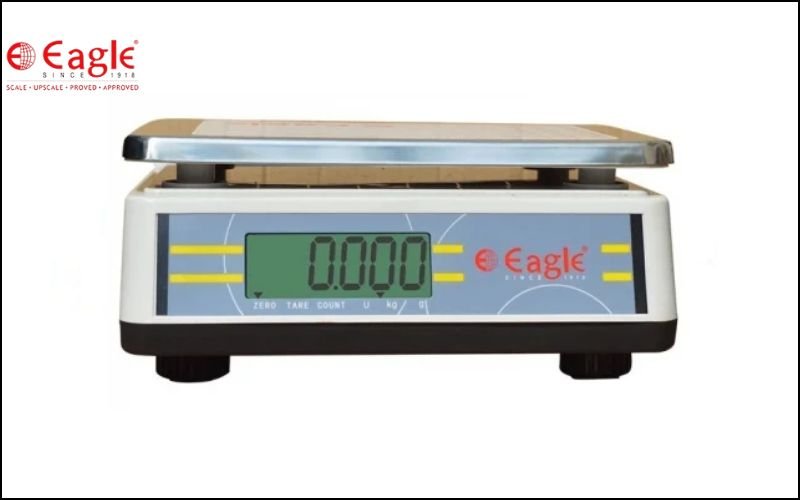
Digital scales are electronic devices that weigh items with the help of sophisticated sensors and digital processing technologies. These smart scales use load cells that convert the force applied by the weight of an object into a readable electrical output. These user-friendly scales give you a clear numerical reading on a digital display.
Most digital weighing scales have the following parts:
- Load cell
- Strain gauges
- Analog-to-digital converter (ADC)
- Microprocessor
- Digital display
Principle and Working
As the object applies weight on the surface of the scale, it leads to the deformation of the strain gauges that exist inside the load cells. This deformation translates into a change in the electrical resistance. This change in resistance generates a proportional electrical signal that is sent to the ADC (Analog-to-Digital Converter) inside the scale, which converts it into a readable output.
What is a Triple Beam Balance?
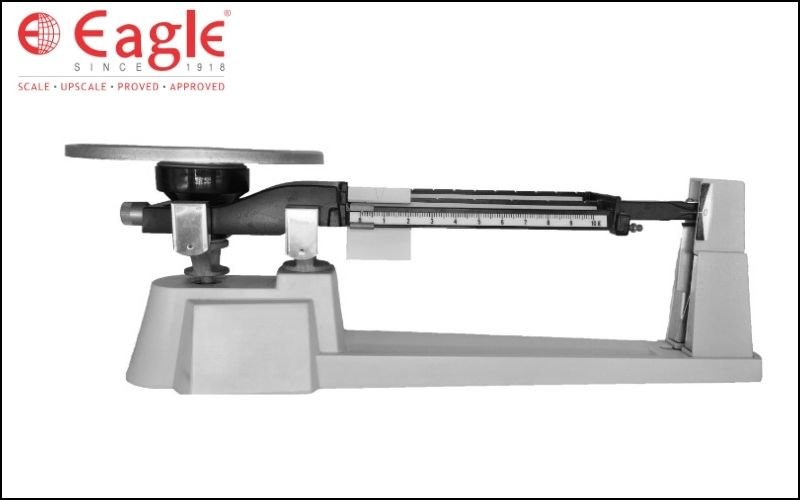
Triple beam balances are mechanical weighing instruments that weigh unknown weights with the help of three beams, along with sliding weights (riders). These scales typically measure objects up to 610 grams.
Each beam has graduations representing hundreds, tens, and tenths of a gram. To use this scale, you adjust the riders on these beams in a way that aligns the pointer with the zero mark. This instrument is completely manual and does not require batteries or a power supply.
A triple beam balance has the following parts:
- A weighing pan
- Three beams
- Sliding weights (riders)
- A pointer and scale
Principle and Working
This instrument works on the principle of moment equilibrium and torque. The scale achieves equilibrium when the clockwise moment matches the counterclockwise moment around the single pivot point.
To use this scale, make sure the pointer is at zero in the absence of any weight on the pan. If the scale is not zero, use the adjustment knob below the pan to do it manually. Then place the weight on the pan, causing the pointer to move.
Now you need to move the largest rider to a point where the scale’s pointer drops below zero. Then move the rider one step back until the pointer rises. Repeat the same process with the middle rider. Finally, you move the smallest rider slowly until the pointer aligns with the zero mark on the scale. At this point, you can add the values of all three beams to determine the total mass of the object.
Digital Scales vs Triple Beam Balances: Key Differences
Now that you have a basic understanding of digital scales and triple beam balances, let’s go one step further and see what sets these weighing scales apart.
- Operating Principle
Digital personal and commercial weighing solutions use the principle of conversion of mechanical force into readable electrical signals. These use load cells, ADCs, and microprocessors to calculate weight. Triple beam balances rely on the equilibrium principle to determine the weight of an object. These scales feature beams, a pan, and sliding weights.
- Weight Capacity
Normal triple beam balances that you see in labs have a capacity of up to 610 g. Some high-end models also come with 2kg weight capacities. The capacity of a digital scale can range from 1g to more than 100kg, depending on its size and intended applications.
- Accuracy and Precision
Triple beam balances typically have a readability of 0.1 g. Digital scales give you greater precision, typically around 0.01 g. The ease of use that these scales offer also eliminates human errors. This results in greater measurement reliability. The precision of triple beam balances relies heavily on the skill of the user.
- Power Requirement
Digital weighing machines need a consistent power supply or batteries to operate. Triple beam balances do not need any external power supply since they are purely mechanical devices.
- Durability and Maintenance
Digital devices need more upkeep as they feature sensitive electronic parts. Rough usage shortens the life of these scales. You also need to perform regular calibrations or maintenance to make sure you get reliable results with these scales.
Triple beam balances are low-maintenance and generally more durable, as they are less sensitive to impacts and moisture than digital scales.
- Applications
Around 64% of weighing applications use digital scales instead of mechanical alternatives. Research also reveals that approximately 41% of the total demand for these scales comes from industrial applications.
The following are some sectors that use digital scales:
- Laboratories
- Chemical Industries
- Pharmaceutical Industries
- Healthcare Facilities
- Food Industry
- Retail or Commercial Sectors
- Packaging and Shipping Industries
- Domestic Uses for Kitchens and Personal Fitness
The following are some common use cases of the triple beam balance:
- Educational Settings
- Science Labs
- Field Research
- Environmental studies
- Measuring the mass of soil, plants, or samples in remote locations
- Comparing masses of objects manually for learning purposes
Conclusion
Digital scales and triple beam balances have different designs, weight capacities, and levels of precision. This directly influences their applications or intended usage.
You need a triple beam balance if you deal with smaller loads in limited educational settings. For personal, commercial, or industrial uses where precision and time-saving are paramount, you need to go with digital scales.
The accuracy and ease of use that digital scales offer make them a reliable option in diverse industries. So consider these key differences between digital scales and triple beam balances the next time you need to purchase a reliable weighing solution for your specific application to get your money’s worth.
You can visit us at Accurate Meezan Oman today to check out our premium quality digital scales for all personal, commercial, and industrial applications.
FAQs
What is a key difference between a digital scale and a triple beam balance?
The main difference is in the way these scales weigh masses. Digital scales use electronic sensors or load cells to convert the force that the mass applies into an electrical signal. A triple beam balance uses sliding weights to bring the scale to an equilibrium to find the value of the unknown weight.
How do digital scales and triple beam balances compare in terms of accuracy?
Digital scales are generally more precise and easier to read as they can detect even the smallest weight changes. The readability of these scales is in the 0.01 g range. Triple beam balances have a readability of just 0.1 g.
Which is easier to use, a triple beam balance or a digital scale?
In terms of ease of use, digital scales stand as a clear winner. These scales instantly weigh the object as soon as you place it on the platform. A triple-beam balance requires extra training or patience to give you the value.
What are some common applications of a triple beam balance?
These scales find uses in:
- Educational labs
- Field research
- Manual measurement practice